
Magic Secret For Consistency: The Big4 (Part 3)
Welcome back to our Big Four archery fundamentals series. If you’re just joining us, be sure to check out Part One and Part Two, where we laid the groundwork for building consistency in your shot.
Because let’s face it: no amount of tuning, stabilizer tweaking, or chasing the perfect FOC will make up for a lack of repeatable form. Mechanical solutions can’t fix fundamental execution errors. Until your body delivers consistency, your equipment can’t help you reach the next level.
Today, we’re moving into Part Three of the Big Four—arguably one of the most misunderstood but game-changing aspects of elite-level shooting: how to correctly address the target after achieving full draw.
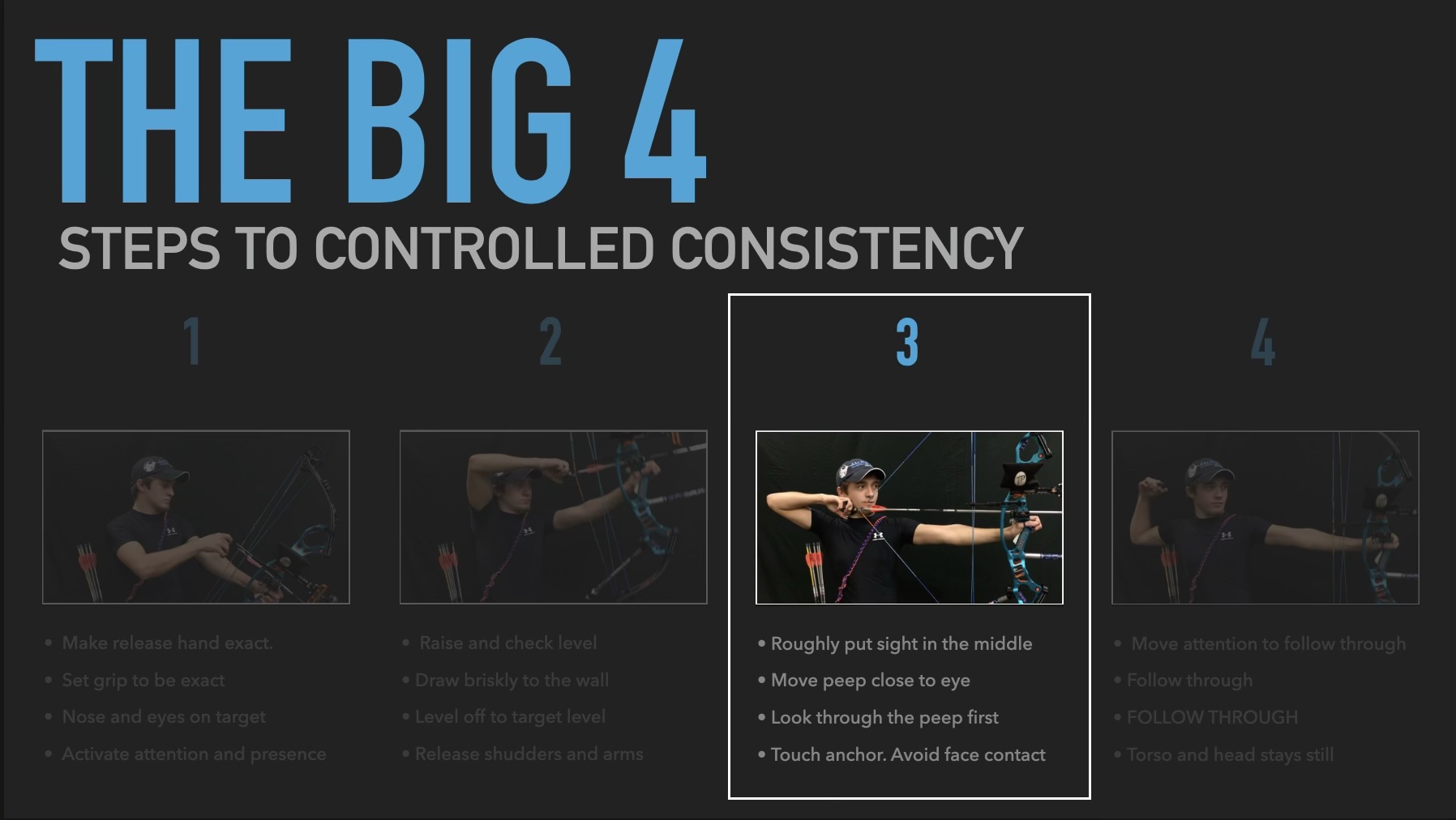
Quick Recap of Parts One and Two
- Part One: Setting up the shot by placing fingers in the release and hand in the grip, aligning the stance, and taking a clarifying breath.
- Part Two: Drawing the bow smoothly to full draw, relaxing the shoulders, and adjusting for uphill/downhill or vertical multi-spot targets.
With those steps complete, you’re ready for the crucial third step.
Part Three: Setting Up to the Target
So you’ve reached full draw—what now?
Part Three is all about aligning your system with the target. This isn’t just “aiming”—it’s directing your pressure and line of force onto the precise spot you want to hit.
Many archers overlook this step, especially in situations with multiple bullseyes, steep angles, or varied elevations. Here’s how to get it right:
1. Pin First, Then Peep
- At full draw, don’t rush to anchor or lock into your peep.
- Keep your release hand floating slightly off your face.
- Look through your scope—even if it’s blurry—and place your pin directly on the bullseye.
This ensures your pressure aligns with the correct spot before you settle into anchor.
❌ Mistake: Anchoring first and then “hunting” for the target. This causes subtle misalignment and off-center shots.
💡 Pro Tip: If you’ve ever accidentally shot the wrong bullseye on a vertical 3-spot, using a “pin-first” setup will help prevent it.
2. Peep Second: Let It Guide Your Anchor
- With the pin already on target, swing the peep into view with minimal head movement.
- Let the peep alignment dictate your anchor—not the other way around.
This might challenge what you’ve been told. Here’s the truth:
- Recurve archers must anchor consistently because they don’t have a peep—head angle directly affects accuracy.
- Compound archers have the peep sight as the true alignment tool. Accuracy comes from visual alignment through the peep, not forcing your anchor into a single rigid spot.
That means your anchor will feel different depending on the distance:
- At 3 yards, your scope sits higher—anchor feels tighter.
- At 100 yards, your scope is lower—the anchor feels lower, too.
By letting the peep dictate your anchor, your alignment is always correct for that specific shot.
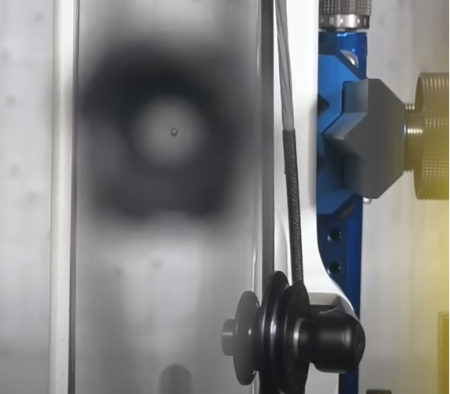
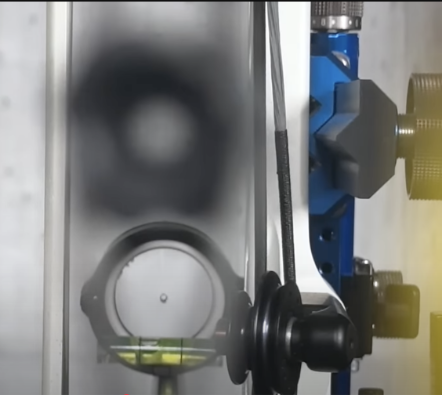
Above – Here’s a camera view through the peep with the sight set at 20 yards. On the right,
the sight has been moved to 100, and the anchor point remains unchanged. This
demonstrates how the viewing angle changes as the sight slides down the bar. By looking
through the peep first, you can eliminate a lot of instability and mistakes. Let the peep tell
you where to touch your anchor on your face.
3. Stability Through Touch
While your exact hand-to-face contact doesn’t determine accuracy, it adds stability.
- Use the side of your index finger or the back of your hand to gently touch your jaw or face.
- This creates a grounding point to reduce excess movement in your sight picture.
Remember: accuracy comes from consistent peep alignment, not from forcing an anchor position.
Putting It All Together
A proper Part Three sequence looks like this:
- At full draw, float the release hand slightly off the anchor.
- Place the pin on the bullseye first.
- Swing the peep into view with minimal head movement.
- Let the peep alignment dictate your anchor.
- Add light facial contact for stability.
This process ensures consistent alignment, regardless of distance or target elevation.
What’s Next: Part Four
Part Four of the Big Four – The follow-through. All the way at the end of the process, follow-through is often shortchanged or altogether skipped by many shooters, and it can be the most important “make or break” step.
Want to Train Part Three With Me?
You can get personal coaching—either online via Zoom or in person— by visiting ImproveMyArchery.com. I coach compound, Olympic recurve, and barebow for all ages and skill levels.
Archery is my life, and if you’re serious about getting better, I’d love to work with you.

About the Author


Comments (0)